The Harsh Truth About Online Casino RNGs Nobody Tells You
Most people who lose money on slots blame bad luck. A smaller group blames the casino. Almost nobody blames the actual problem, which usually sits somewhere between their chair and their keyboard. After nearly a decade of grinding poker tables, testing slot RTPs with spreadsheets, and watching friends torch their bankrolls on same-game parlays, I've learned that the gap between winning and losing players has almost nothing to do with luck and almost everything to do with two unglamorous skills: understanding the math and managing your own impulses.
Let's be honest about what iGaming actually is in 2025. It's a multi-billion dollar industry engineered by PhD mathematicians, behavioral psychologists, and UX designers who get paid obscene salaries to keep you clicking. That doesn't mean you can't enjoy it or even win. It means you need to walk in with your eyes open, not with a fantasy about "due" jackpots or "hot" tables.
Why the RNG Is Not Your Enemy (But It Isn't Your Friend Either)
The first thing every new player gets wrong is believing that slot machines "build up" to a win. They don't. A random number generator (RNG) is firing thousands of results per second, and your spin is just a snapshot. The machine has no memory of your last hundred dead spins. There's no warmth building in the reels.
What matters is return to player (RTP) and variance, and most players conflate the two.
- RTP is the theoretical percentage returned to players over millions of spins. A 96% RTP slot loses you 4% on average over that massive sample. Over your 200 spins on a Saturday night, RTP is basically meaningless.
- Variance (or volatility) is what you actually feel. High-variance slots like Money Train 4 or San Quentin can eat 500 spins without so much as a 10x hit, then drop a 2,000x bonus. Low-variance slots like Starburst trickle small wins constantly.
Here's the practical takeaway: pick your variance to match your bankroll and your temperament. If you have $50 and want a session that lasts an hour, you're insane to play a high-volatility slot at $1 per spin. You'll be busted in twelve minutes and furious. Match the game to your reality, not to some YouTube streamer doing 100x spins with someone else's affiliate money.
Poker Is Still the Only Game Where Skill Moves the Needle
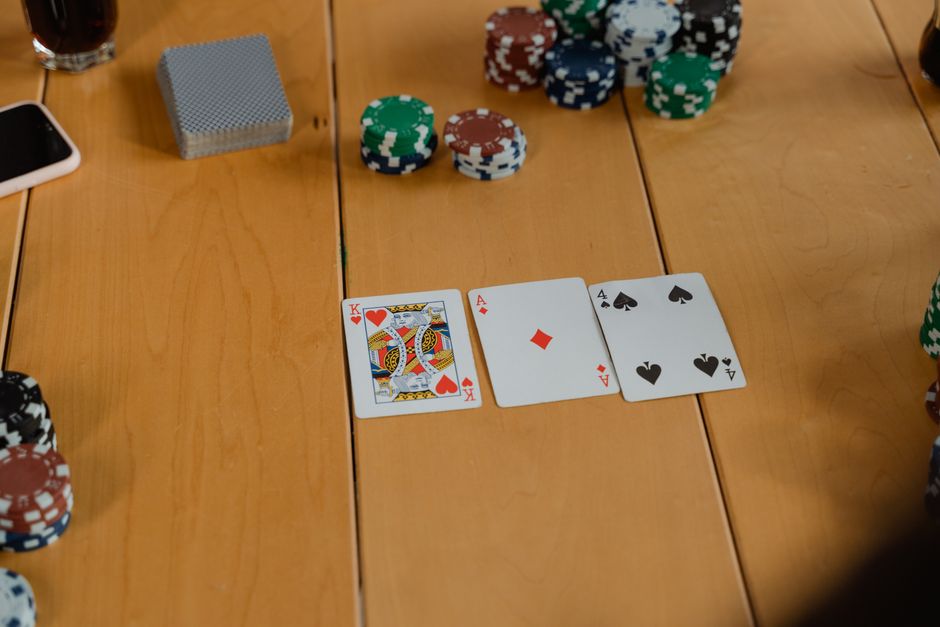
Slots and most casino table games are negative expectation. Full stop. You can win in a session, but you cannot win long-term against a 2.7% house edge on European roulette or a 5.26% edge on American roulette. The math is ironclad. A good place to continue is mahjong ways 2.
Poker is different. In cash games, you're not playing the house; you're playing other humans, and the house just takes a rake. A skilled player can beat a soft table for 5-10 big blinds per hour, consistently. That's real edge, and it's the reason poker still attracts people who treat this as a grind rather than a lottery.
But here's the catch nobody mentions enough: the rake kills marginal winners. If you're playing $1/$2 live with a 10% rake capped at $5, you need to be genuinely good to show a profit. Online rakeback and loyalty programs help, which is why serious players game those systems aggressively. Sign-up bonuses, reload offers, and VIP tiers are basically free money for disciplined players and pure bait for everyone else.
A quick reality check on your poker ambitions:
- If you can't beat $0.05/$0.10 online over 20,000 hands, moving up is delusion.
- Track every session. Not "I think I'm up." Actual numbers in a spreadsheet.
- Play fewer tables. Multitabling kills your reads, and reads are where the money hides.
- Study more than you play until you're profitable. Netflix poker isn't study.
Sports Betting: Where Smart Money Quietly Bleeds
Sports betting is the fastest-growing vertical in iGaming, and it's also the one where recreational bettors are most confidently wrong. The bookmaker's margin on a standard -110/-110 line is about 4.5%. That's the tax you pay for the privilege of betting.
Where it gets interesting is line shopping and closing line value (CLV). Professional bettors don't obsess over win rate; they obsess over beating the closing line. If you consistently get +105 on a team that closes at -110, you have edge, regardless of whether that specific bet wins.
- Always have accounts at three or four books minimum. Line differences of 10-15 cents are common and they compound.
- Fade public money on primetime NFL games. Not always, but the pattern is real and documented.
- Avoid parlays as a strategy. They're a lottery ticket with worse odds than most people realize. A 5-leg parlay at -110 each leg pays roughly 24-to-1 but has a 2.5% implied win probability at fair odds.
- Live betting offers value because books are slower to adjust than the game state changes. That window is shrinking but it exists.
The Bankroll Rules Nobody Follows (But Should)
Every gambling guide says "manage your bankroll." Almost nobody defines it. So here's a working definition: your bankroll is money you can lose entirely without changing your life. Rent money is not bankroll. Emergency fund money is not bankroll. The $200 you were going to spend on a concert is bankroll.
Once you've defined it, set unit sizes:
- For slots, no more than 1% of bankroll per spin. With $500, that's $5 spins. Sounds small. It isn't.
- For poker cash games, 20-30 buy-ins minimum. Playing $1/$2 with $400 is gambling on variance, not skill.
- For sports betting, 1-2% per bet. Flat staking beats "confidence" staking every time.
- For tournaments, no more than 1% per buy-in unless you're a proven winner.
The harsh truth is most people ignore this because it feels boring. Boring is what keeps you in the game. The exciting players go broke and write angry forum posts about rigged RNGs.
Bonuses, Wagering Requirements, and the Fine Print Trap
Welcome bonuses are marketing, and the wagering requirements are where the house gets its money back. A "$1,000 bonus at 40x wagering" means you need to bet $40,000 before withdrawing a cent. If the bonus's expected value is negative after wagering, you're not getting a bonus, you're getting a debt with extra steps.
Read the terms. Look for game contribution percentages (slots usually contribute 100%, blackjack often 10%, live dealer sometimes 0%), maximum bet rules while clearing a bonus, and expiry windows. A good rule: if the wagering requirement is over 30x and the games contribute less than 50%, skip it unless you were going to play anyway.
Final Thought: Treat It Like a Cost, Not an Investment
The most grounded gamblers I know treat their losses as the price of entertainment, the same way they'd treat a concert ticket or a nice dinner. They set a number, they lose it or win with it, and they walk away without drama. The ones who get into trouble are the ones chasing, the ones convinced a jackpot is due, the ones who think one more deposit will fix last week.
iGaming can be genuinely fun. It can even be profitable if you're playing poker or betting with real edge. But it will never be a reliable income stream for a casual player, and any site or influencer telling you otherwise is selling you something. Know the math, respect the variance, and keep your ego out of your bankroll. That's the whole game.

A British Seasonal Pantry Calendar: What to Buy, Store and Cook Month by Month
A month-by-month guide to British seasonal pantry cooking, from Seville orange marmalade in January to...

Freezer-to-Pantry Meal Prep: 8 Make-Ahead Dinners for Busy Weeks
Eight make-ahead dinners that pair freezer portions with pantry staples — from slow-cooked ragù to lentil...
About Us